


 -gazetkę


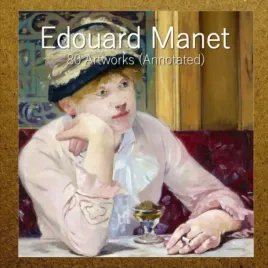
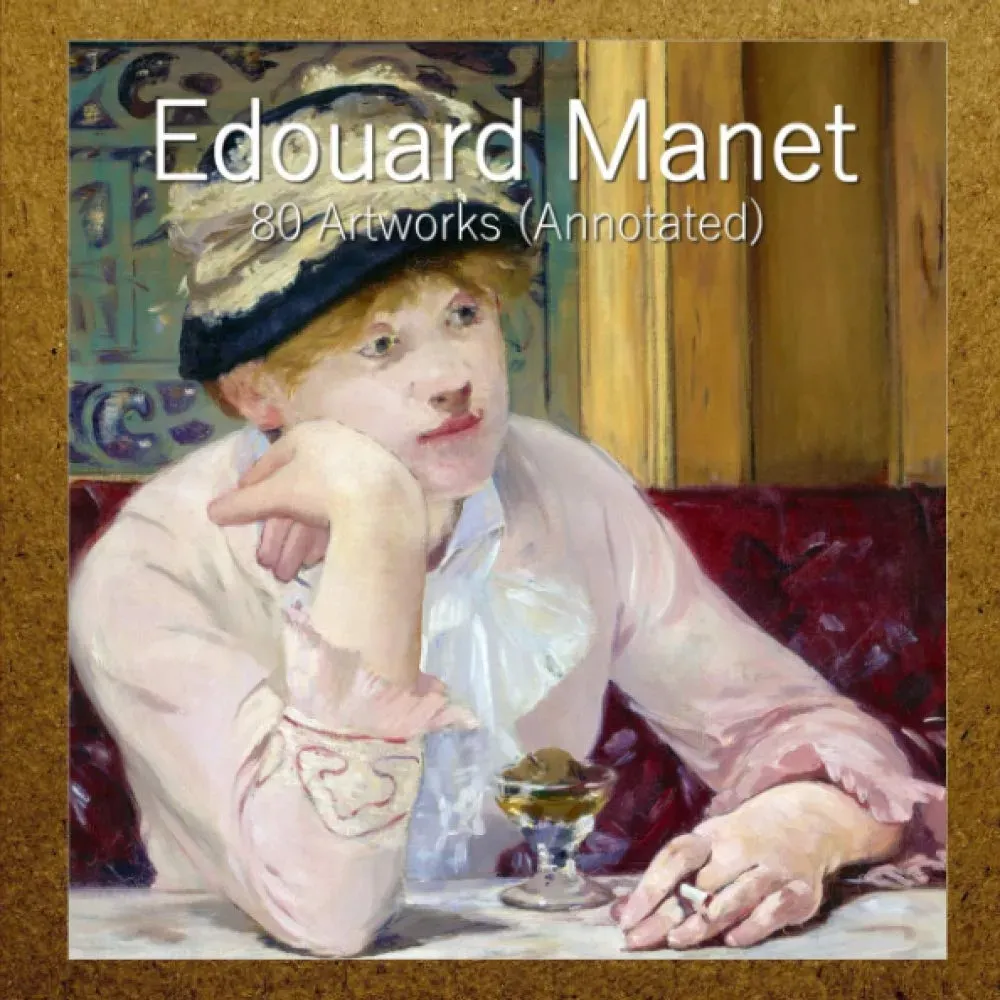
Edouard Manet: 80 Artworks (Annotated)
Parametry
- Stan
- Nowy
- Faktura
- Faktura VAT
- Tytuł
- Edouard Manet: 80 Artworks (Annotated)
- Autor
- varius
- Wydawnictwo
- AA
- Okładka
- brak informacji
- Wysokość produktu
- 1 cm
- Język
- angielski
- Nośnik
- książka papierowa
Opis produktu
Edouard Manet: 80 Artworks (Annotated)
Opis:
The general tone of Manet's work is not that of a radical painter concerned only with the visual world. He was a sophisticated city dweller, a gentleman who conformed in every way to the nineteenth-century concept of the dandy: a distant, refined observer who contemplated from an elegant distance the spectacle that surrounded him. From this point of view, Manet finishes what will undoubtedly be one of his most scandalous paintings, rejected at the 1863 Salon and exhibited at the Rejected, Lunch on the Grass.The challenge was posed by a contemporary reality, the bathers of the Seine, and the scene was reformulated in the language of the old masters (the painting is clearly inspired by the country festival of the Giorgione), competing with them and at the same time highlighting the differences. Scenes with the theme of leisure in the countryside were already deeply rooted in Western art and abounded in both popular and academic illustrations, but Manet's painting belongs to a different order, disturbing because of the obvious closeness with which it confronts the viewer.But even more scandalous was the Olympia, painted in 1863 and not presented to the Salon until 1865, when it was rejected. Among the reasons why this painting was to be shocking are not least the fact that it is not only a clear parody of a Renaissance work, (Titian's Venus of Urbino), but also a striking description of modern sexual habits. Manet replaces a Venetian goddess of love and beauty with a refined Parisian prostitute. But what really baffled critics at the time was that Manet did not romanticize or idealize her, and Olympia seemed neither embarrassed nor dissatisfied with her work. She is not an exotic or quaint figure. She is a flesh-and-blood woman, presented with a dazzling, frontal illumination, about which the painter shows a disturbing detachment that does not allow him to moralize about her.Both works enthused the younger painters because of what they supposed to be a direct observation of contemporary life, because of their naturalness and their technical emancipation. Manet thus became, almost unwittingly, the main character of the group that met at the Café Guerbois, the cradle of Impressionism.No painter from the Impressionist group has been as controversial as Manet. For some, he was the purest painter ever, completely indifferent to the objects he painted except as neutral excuses for contrasting lines and shadows. For others, he built symbolic cryptograms in which everything can be deciphered according to a secret but intelligible key. For some, Manet was the first genuinely modern painter to free art from its mythical duties. For others, he was the last great painter of the old masters, too rooted in a multitude of historical-artistic references.Some still believe that he was a painter of poor technique, completely incapable of achieving coherence in space or composition. Others think that it was precisely these "defects" that constituted his fundamental contribution to the drastic and enormously fruitful transformations that he introduced into the pictorial structure.
Autor:
Nośnik:
Płyt:

Język: English: Published; English: Original Language; English
Data wydania: 2020-09-28
Waga: 0.00 gram
Wysokość: 0 cm
Szerokość: 0 cm
Długość: 0 cm
UWAGA: Kupując produkt na tej aukcji zgadzasz się na wydłużony termin realizacji wysyłki (10-14 dni roboczych). Podany towar pochodzi z zagranicznego magazynu, stąd wydłużony czas realizacji który podany jest obok.